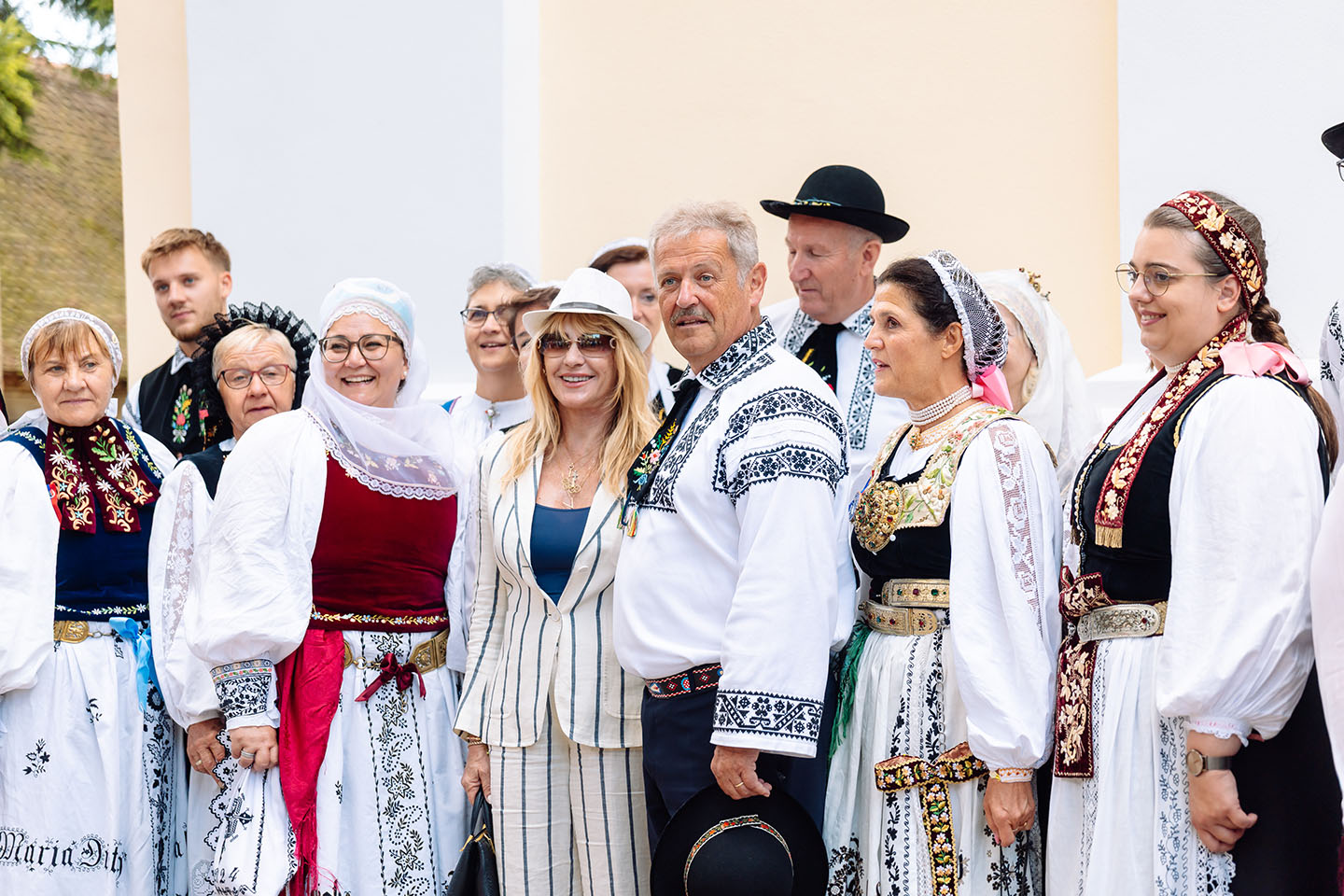


- “Here, everyone talks to everyone else, as if they’ve known each other for 10–15 years, even though we may have only just met,” remarked Romania’s great champion, ambassador for this year’s edition of the Saxon festival in “Haferland”
- This year’s festival is said to have attracted its largest audience to date: nearly 10,000 participants attended the 60 events organised as part of the festival
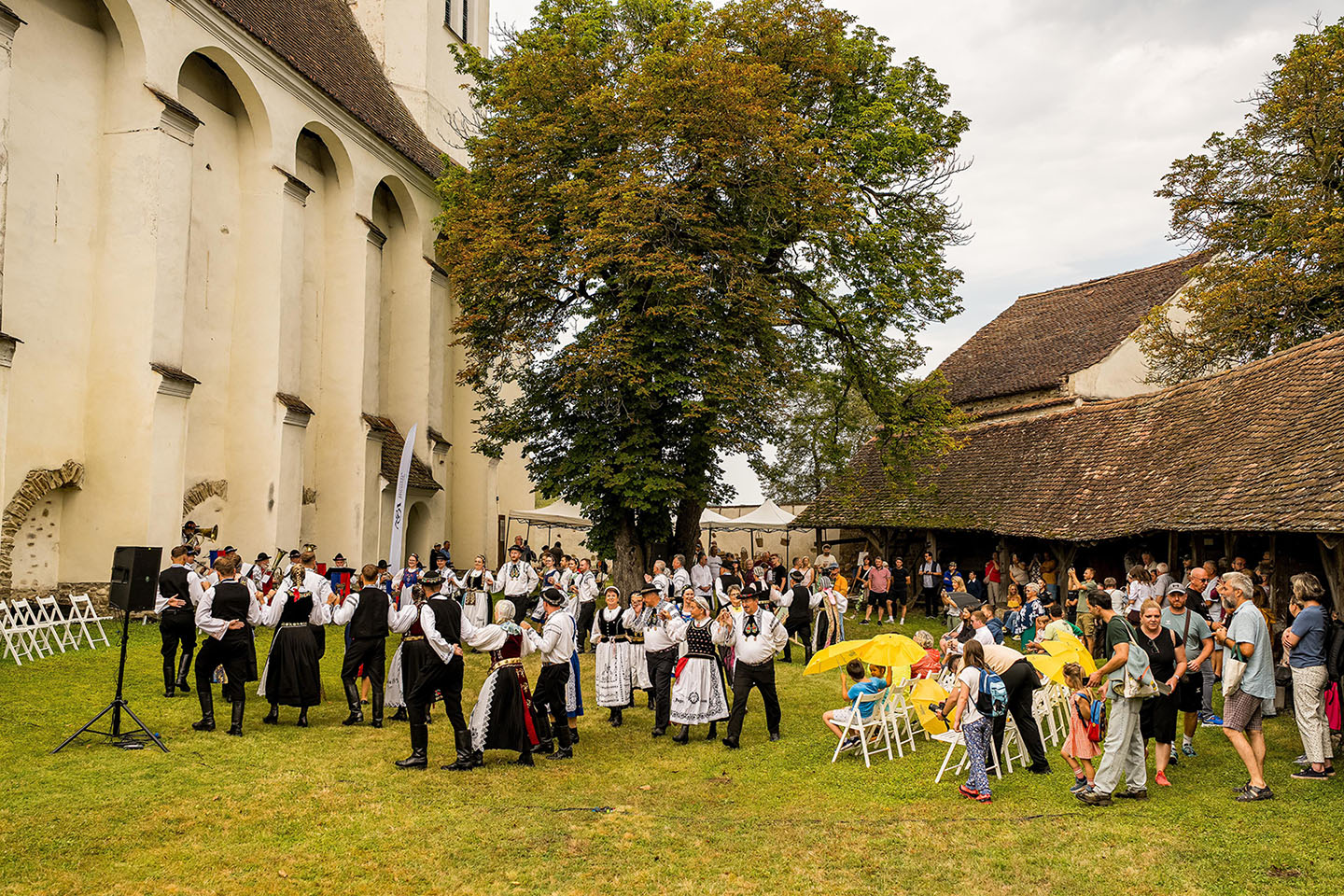
- Luiza Zan’s eclectic concert at Rupea Fortress, the Saxon brass band parades in Criț and Roadeș, the traditional wedding at the fortified church in Criț, the travelling exhibition ‘Agapi, half a century of love’ by the artist Kira Hagi, the traditional Saxon ball, the traditional costume parade and the workshops that brought old crafts back into the spotlight for children and adults alike were among the most popular events
- ‘Longing for Transylvania’, the theme of this year’s edition, served as an umbrella covering a very broad spectrum of feelings among participants, ranging from nostalgia to the pride and joy of feeling like a small part of Haferland, one of Europe’s most picturesque tourist regions, often compared to Tuscany
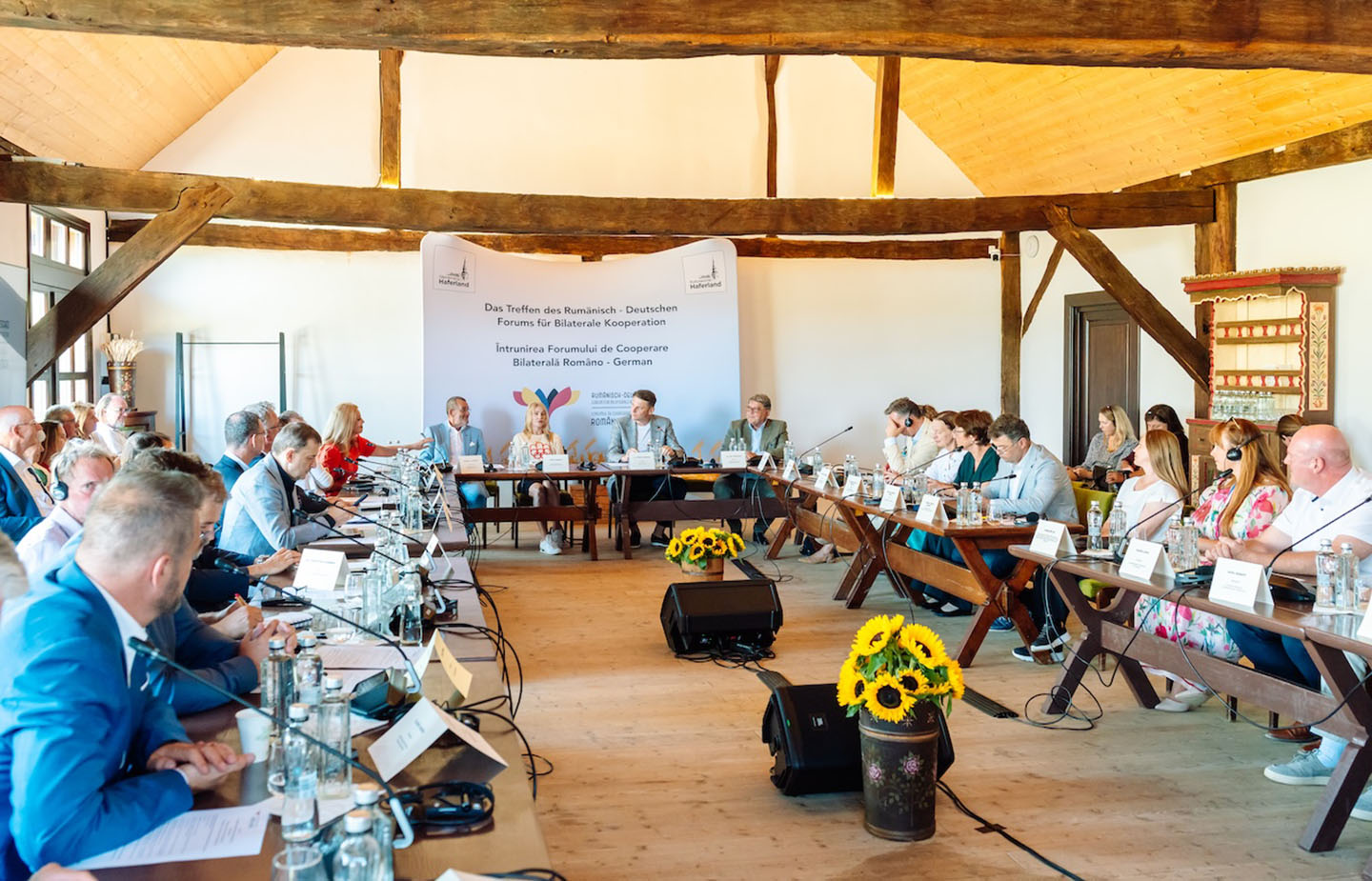
- One of the conclusions of the Romanian-German Bilateral Cooperation Forum (FCBRG), a debate organised as part of Haferland Week, is that the Romanian language should be made available within the German education system
Criț, 10 August. Haferland Week 2026 came to a close last night with new records: nearly 10,000 participants and over 60 events organised across the 10 participating towns in Haferland. But perhaps the most striking record was that of the love and admiration shown for Nadia Comăneci, Olympic and world champion and a legend of Romanian sport, who drew hundreds of people into the courtyard of the fortified church in Criț. The day before, Nadia Comăneci met with children taking part in a comprehensive educational programme in the village, an initiative that has been fully funded for over 10 years by the Michael Schmidt Foundation.
This year’s edition of Haferland Week, the 14th, was organised under the High Patronage of the President of the Romanian Senate, Mr Mircea Abrudean, and under the patronage of Nadia Comăneci, a legendary figure in world sport and the first gymnast in history to achieve a perfect score of 10 at the Olympic Games in Montreal, in 1976.
The more than 60 events taking place as part of the festival were held in Archita, Viscri, Cloașterf, Bunești, Meșendorf, Rupea, Saschiz, Roadeș, Criț and Homorod, in the fortified churches of these villages, as well as in the fortresses — such as the restored ones in Rupea and Saschiz — were most often the meeting place for Saxons from across the country and abroad, along with guests from all over the world.
“It feels like we’re at the opening ceremony of the Olympic Games here. So many people have come from all over! And everyone is talking to everyone else, as if they’ve known each other for 10–15 years, even though we’ve only just met. The fact that you’ve created this community, the fact that you’ve opened the door instead of knocking and barging in, is fantastic,” Nadia Comăneci told the participants of Haferland Week.
The great Olympic and world champion openly expressed her delight that this year, sport has been added to the themes of Haferland Week, alongside culture, traditions and celebrations. “What could be more beautiful than having your roots close to you, because that’s what we’re talking about at Haferland – roots and traditions,” Nadia added.
On the final day of the festival, following the official ceremony and the guests’ speeches, the audience was treated to a premiere screening of an excerpt from the documentary ‘Nadia. The Perfect Ten’, dedicated to our great gymnast.
Michael Schmidt: “For me, longing isn’t just about missing a place. It’s about having a reason to come back.”
According to the festival’s organiser and founder, Michael Schmidt, president of the foundation that bears his name, Haferland Week is “the place where thousands of people from home and abroad come together because they share the same love for Transylvania.
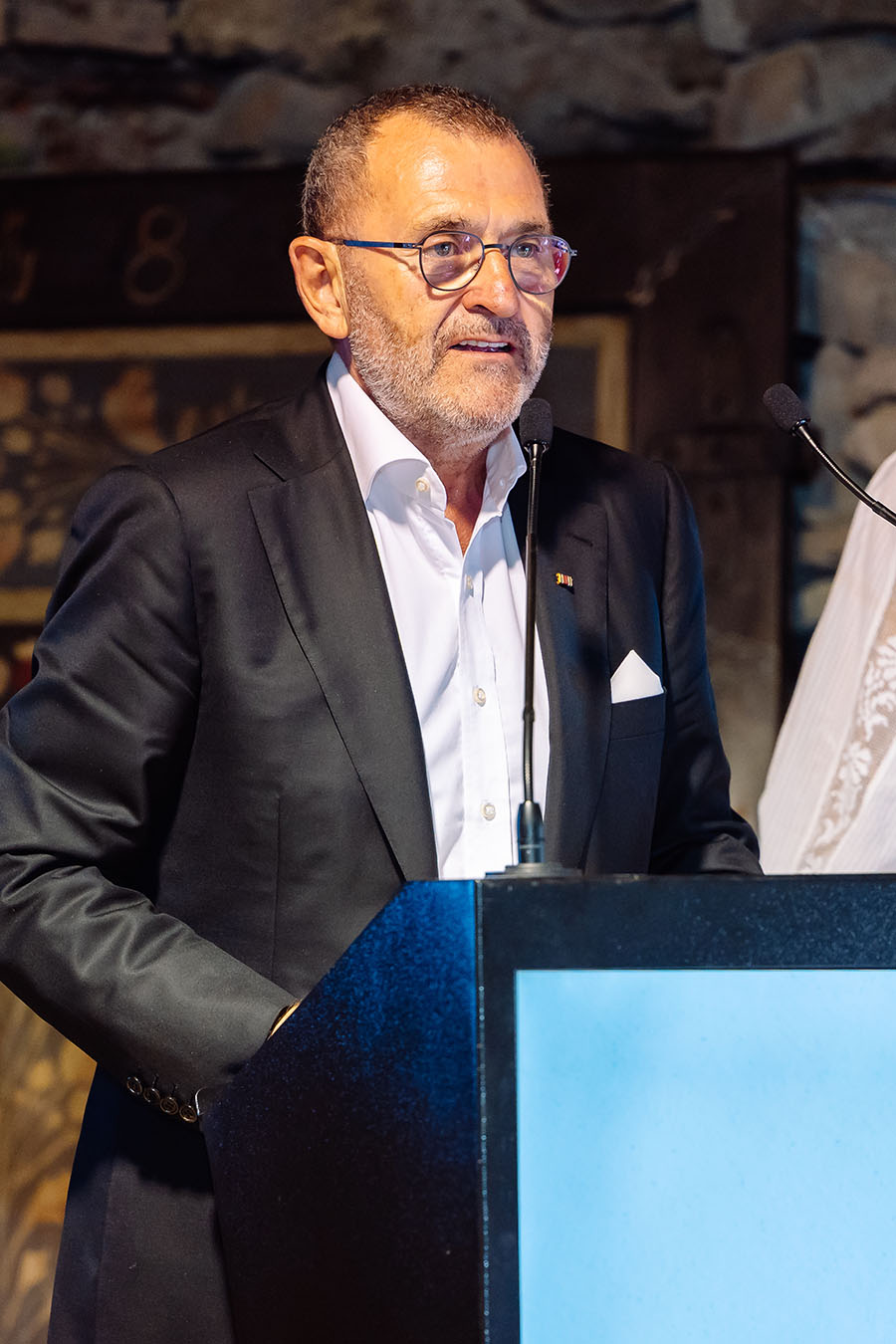
The theme of this year’s edition is ‘Longing for Transylvania’. And for me, longing doesn’t just mean missing a place. It means having a reason to come back. It means the connection with the people, the values and the heritage that give this community its identity. In a world that is changing ever more rapidly, places that retain their authenticity become all the more valuable. Here, we invest in culture, education and heritage for the younger generations. Because this heritage does not hold us back, but guides us towards the future. Communities are built above all around the people who inspire us. If, as we leave, we simply say ‘see you next year’, then that means Haferland has found a place in your hearts,” said Michael Schmidt on Sunday in Criț.
And Haferland Week 2026 was certainly not short of inspiring people and events. Among the most popular events were the concerts by the three Saxon brass bands from Germany, which delighted audiences in each of the host communities over the course of the week, Saxon and Romanian folk dance groups, children’s theatre troupes, Luiza Zan’s eclectic concert held within the walls of Rupea Fortress, the parades in Criț and Roadeș, the traditional wedding in the fortified church in Criț organised with the help of the Saxon groups Projektgruppe Haferland, Original Karpaten Express and Siebenbȕrger Trachtenkapelle Göppingen, the travelling exhibition ‘Agapi, half a century of love’ by the artist Kira Hagi, as well as the traditional ball and the workshops that have brought old crafts back into the spotlight for children and adults alike.
Mircea Abrudean, President of the Senate: “Haferland Week has long since ceased to be merely a cultural festival”
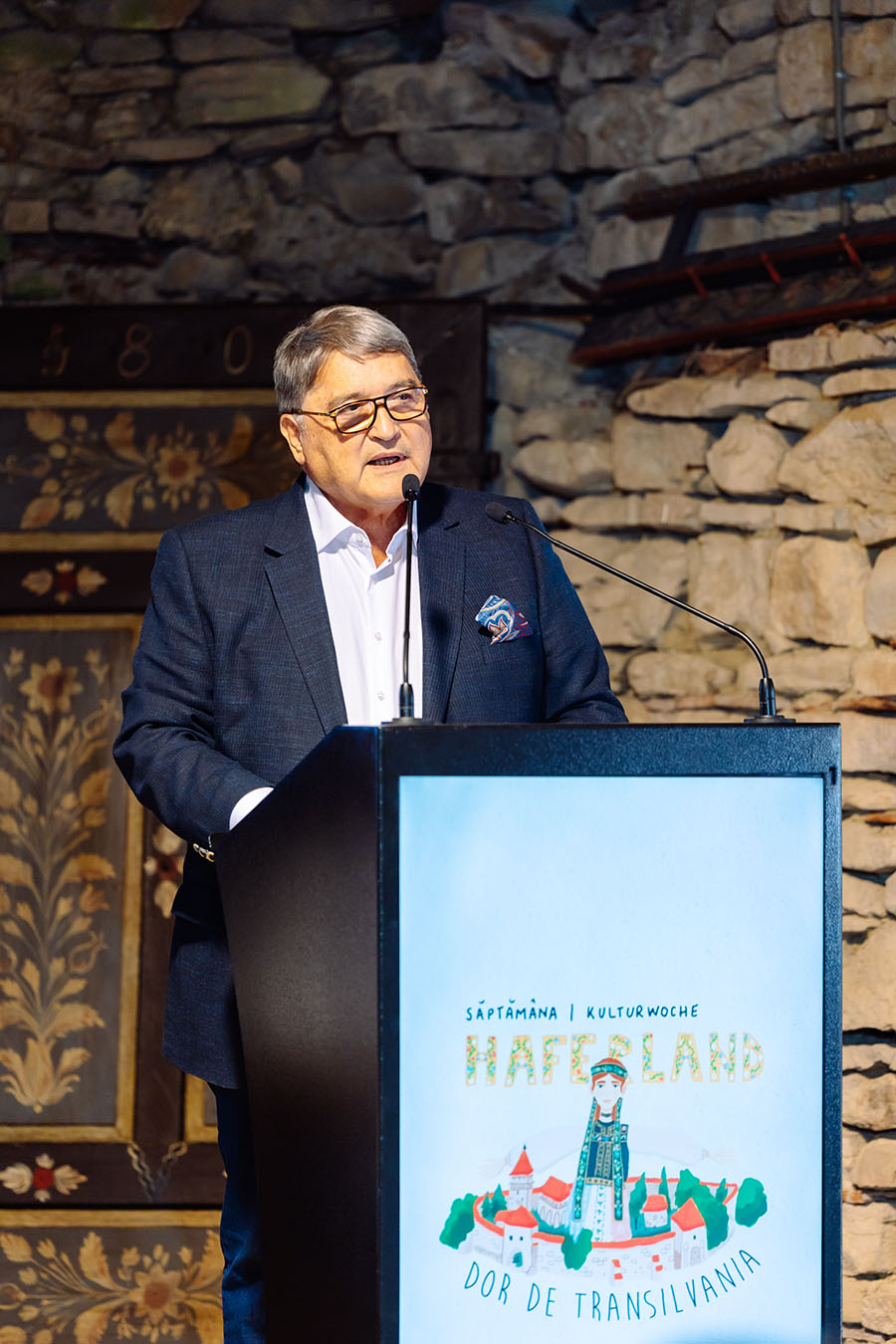
“I return here, to the heart of Transylvania, my home, always with joy and with the feeling that I am returning to a place where time preserves what is most precious in our civilisation: traditions and love for our country. Haferland Week has long since ceased to be merely a cultural festival; it is a promise kept year after year and a living symbol of dialogue between communities, cultures and generations. (…) And this year’s theme – ‘Longing for Transylvania’ – reminds us of an essential truth: heritage is not made up solely of walls, towers or fortified churches; heritage lives on through people. It is this connection between people and their cultural heritage that transforms Transylvania into a European model of multiculturalism and harmony,” said Mircea Abrudean, President of the Senate, at the closing ceremony held on Sunday in Criț.
FCBRG: the Romanian language should be available in the German education system
“Cultural heritage is a resource for local development,” said Michael Schmidt on Saturday, 8 August, at the annual meeting of the Romanian-German Bilateral Cooperation Forum (FCBRG), an organisation founded 10 years ago with the aim of maintaining dialogue on economic and cultural issues between the two countries. During the meeting, attended by the heads of the German, Austrian and Israeli diplomatic missions in Bucharest, as well as members of the government and parliament in Berlin, participants emphasised the need to establish more direct links between communities in Germany and Romania.
“We are Europe when we work together, not the bureaucracy,” said H.E. Gunther Krichbaum, State Minister for Europe at the German Federal Ministry of Foreign Affairs. Furthermore, the German politician of Romanian origin, Bernd Fabritius, Federal Government Commissioner for Immigrants of German Origin and National Minorities and a former member of the Bundestag, spoke of the role of the Romanian diaspora in Germany – the largest non-German ethnic group in the state of Bavaria – as a bridge between the two countries.
According to Adriana Stănescu, Romania’s ambassador to Berlin, there are currently around 909,000 Romanians living in Germany, a figure that rises to approximately 1.2 million when people with dual nationality are taken into account.
Furthermore, Oana Krichbaum, a lawyer and president of the German-Romanian Society in Pforzheim – a German-Romanian civic and cultural association that promotes cultural ties between Germany and Romania – stated that, in this context, it is time to take steps to ensure that the Romanian language is made available within the German education system.
The presidents of the two bilateral cooperation organisations (FCBRG and the German-Romanian Forum, respectively), H.E. Mr Emil Hurezeanu and H.E. Mr Gunther Krichbaum, have set out to organise and manage closer contacts in Bucharest and Berlin, more than ten years after the FCBRG was established in 2015.
Between 2015 and 2025, the Romanian-German Bilateral Cooperation Forum was led by Mr Andrei Pleșu, a distinguished figure in Romanian public and intellectual life. As of this year, the organisation’s activities are led by H.E. Mr Emil Hurezeanu. The German-Romanian Forum was established in 2000, under the leadership of the prominent German politician Susanne Kastner, as a means of fostering civic and societal cooperation between the two countries. Since 2019, the Forum has been led by H.E. Mr Gunther Krichbaum, who at the time held the position of Chair of the Bundestag’s Committee on European Affairs. Traditionally, the chairs of the two forums are prominent public figures, whilst the vice-chair positions are held by the serving ambassadors in Bucharest and Berlin, Adriana Stănescu and Angela Ganninger respectively.
The third edition of Youth Haferland
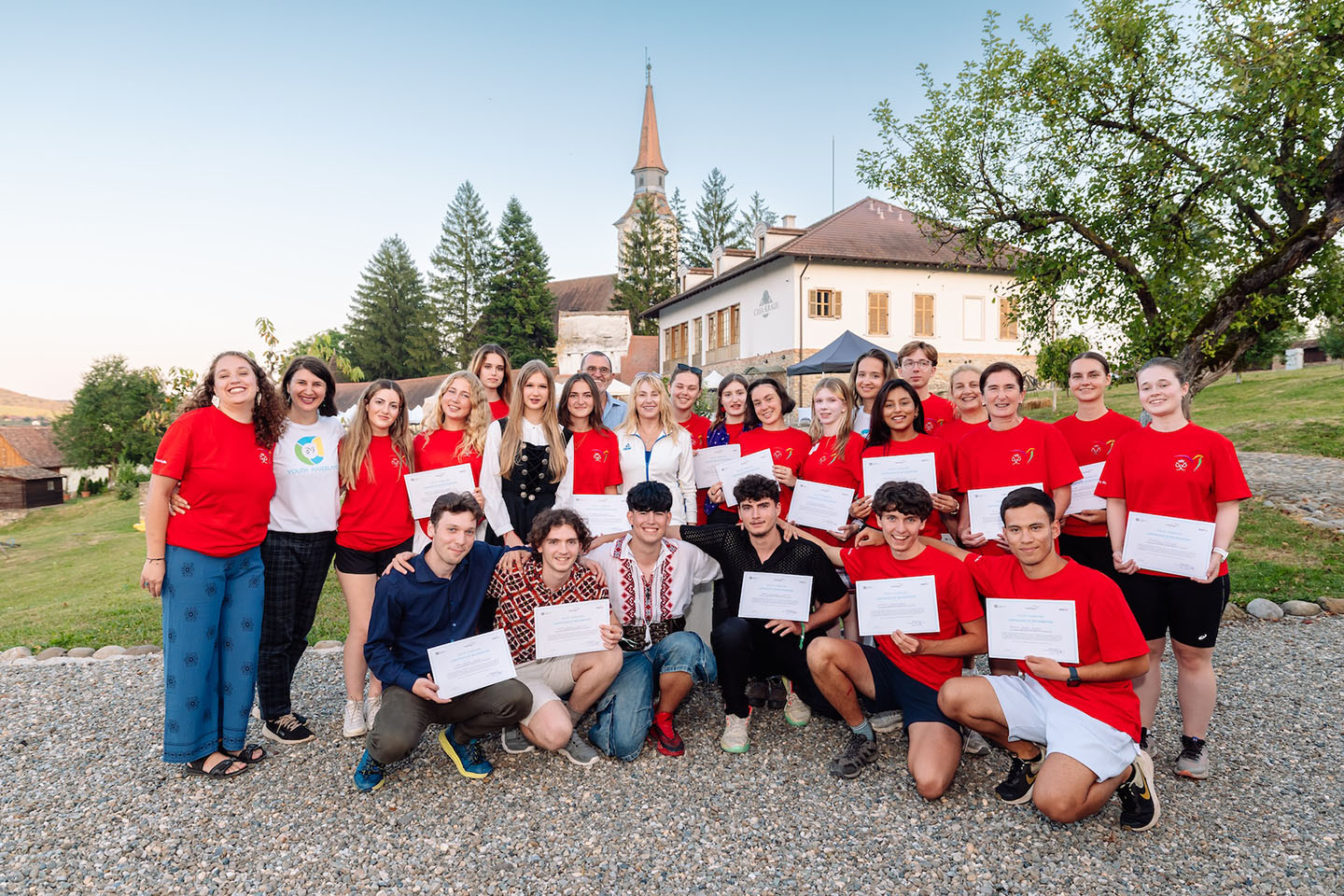
Thanks to the partnership established in 2024 between the Michael Schmidt Foundation and The Duke of Edinburgh’s International Award Romania, this year’s festival once again included a component aimed at young people: the Youth Haferland initiative, an educational and adventure camp designed to build bridges between young people, communities and local cultural heritage, with a focus on civic engagement and identity.
This year, for the first time, two international teams from Bulgaria and the Czech Republic took part in Youth Haferland, alongside a team from Romania. On the final day of the camp, the young people also had an inspiring meeting with Nadia Comăneci.
Run on a global scale, The Duke of Edinburgh’s International Award programme offers international recognition and a structured framework of non-formal educational activities for young people aged between 14 and 24. Internationally, the programme is patronised by HRH The Duke of Edinburgh, and nationally by HRH Margareta, Custodian of the Romanian Crown.
The 14th edition of Haferland Week is organised in partnership with Tegeler Gruppe, the CON-A Foundation, CEC Bank, Geiger, Aqua Carpatica, Domeniile Sâmburești, Automobile Bavaria and MHS Truck & Bus, with the support of the Federal Government of Germany, through the Commissioner for Matters Relating to Repatriated Ethnic Germans and National Minorities, as well as the State of Bavaria.
Media partners: Radio România Actualități, Radio România Cultural – Regional Studios Department, Radio România Antena Satelor and Radio România Internațional, as well as the online Saxon-language station Radio Siebenbȕrgen.
The festival organisers, the Michael Schmidt Foundation and the Tabaluga Foundation // Peter Maffay Foundation, are supported by the following partners: the Democratic Forum of Transylvanian Germans, the Association of Transylvanian Saxons in Germany, the Evangelical Church of the Augsburg Confession in Romania, through the District Consistory of the Evangelical Church of the Augsburg Confession in Brașov, the Cultural Centre of the Transylvanian Saxons in Bavaria, the ‘Dimitrie Gusti’ National Village Museum in Bucharest, the Mihai Eminescu Trust Foundation, the ADEPT Transylvania Foundation, the Nowero Association, Rupea Town Council, the Discover Archita Association, Vânători Town Council (Mureș County), Saschiz Town Council (Mureș County), the Saschiz Women’s Neighbourhood Association, Bunești Town Hall (Brașov County), the Kraus House (Criț, Brașov) and with the support of Bucharest City Hall and ARCUB.